
Yesterday, SCOTUS ruled 9-0 in a landmark case that changes freight broker liability forever. SCOTUS ruled in favor of Montgomery in Montgomery v. Caribe Transport II LLC, setting a precedent that the FAAAA does not preempt state lawsuits against brokers who arranged transportation with an unsafe carrier.
Some people are saying this is the end of small to mid-size freight brokers, and others aren’t worried a lick. So, let’s break this down for those of us who aren’t lawyers.
Historical Context
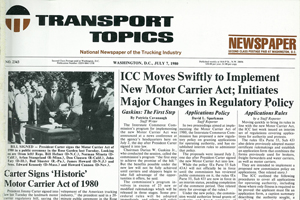
In the 1980s the United States government passed the Motor Carrier Act of 1980—an act that would begin deregulating the trucking industry. This meant that states could no longer put restrictions on what goods, and when and where they could be carried, and for how much. It also made it easier to obtain a motor carrier license, allowing more companies and trucks to enter the market, reducing the existing monopolies and bringing down freight rates across the board. Basically, this allowed the rates and services of trucking companies to be set by the market, not the government.
Though the federal government had deregulated the transportation industry, individual state laws still created a messy web of legalities. So, in 1994, Congress included a provision in the Federal Aviation Administration Authorization Act (FAAAA, also F4A) that allowed federal law to preempt any state regulations on prices, routes, or services, with one exception—safety.
In short, civilians couldn’t sue motor carriers over broken state laws because federal laws superseded them. But ever since then, the courts have been split on how the safety exception applies to 3PLs.
So What Happened in the Court Room?
Shawn Montgomery lost a leg when a driver from Caribe Transport II LLC crashed into him. Aside from suing Caribe Transport, Montgomery also filed suit against C.H. Robinson, the freight brokerage that had arranged the transportation, i.e. hired Caribe Transport.
The court sided with Montgomery in saying that C.H. Robinson should have done due diligence to make sure the Caribe Transport was a company with a safe driving record. In simple terms, it seems like that should be an easy agreement, “yes, make sure that you’re only hiring safe companies to drive heavy trucks.” But who determines the definition of “safe”?
C.H. Robinson’s defense was that the government’s system of tracking records and assigning safety scores through the Federal Motor Carrier Safety Administration (FMCSA) should be enough for them to rely on. In fact, the FMCSA requires brokers to only work with their registered carriers, so why did the one entity that C.H. Robinson relied on for vetting purposes fail them and how does that effect freight broker liability?
Quantifying "Safe"
The FMCSA, meant to hold motor carriers and drivers accountable (but not address freight broker liability) for their role in safety, maintains a database that assigns each registered company a Compliance, Safety, Accountability (CSA) score. This score is based on data only from the last 24 months and is updated once a month. The score is determined by the number of safety violations and inspections, severity of violations and crashes, when safety violations occur, acute and critical violations found during investigations, the number of vehicles a carrier operates and the number of miles on a vehicle.
Unfortunately, CSA scores are unreliable more often than not for a myriad of reasons.
First of all, you might have trouble even finding a CSA score. 94% of carriers don’t even have a score because of the way that scores are calculated. Getting a CSA score requires historical data—if you’re a new company, you don’t have a history to create that data. And since those scores require recent inspections to be calculated, if you haven’t had any recent inspections, your score can’t be calculated. On the other hand, if you’ve had one inspection with one violation, like not wearing your seatbelt, then 100% of your inspections contain a violation.
When I searched the FMCSA database for the carrier mentioned in the lawsuit, Caribe Transport LLC, you’ll see there’s several companies it could be confused with and Caribe Transport II isn’t even listed. The government database responsible for providing safety information on carriers is failing brokers from the very start; brokerages can be sued for hiring an “unsafe” carrier, but there is no legal definition of “safe” or “unsafe”. It’s up to the brokers to do their own research, check references, and collect data to make smart decisions. Still doesn’t seem like an absurd thing to ask of brokerages, so why is the SCOTUS ruling such a big deal?

How the SCOTUS Ruling Changes Freight Broker Liability
Now that the door of suing a brokerage for personal injury has been opened, the industry worries the lawsuits will start pouring in, whether they have a legal basis or not. The cost of litigation for every single claim and the increase in insurance has the potential to drive small brokers out of business completely. Even the larger brokerages will experience increases in insurance and operational costs, and I’m sure those costs will be passed back to the average consumer.
How LYNC takes care of safety
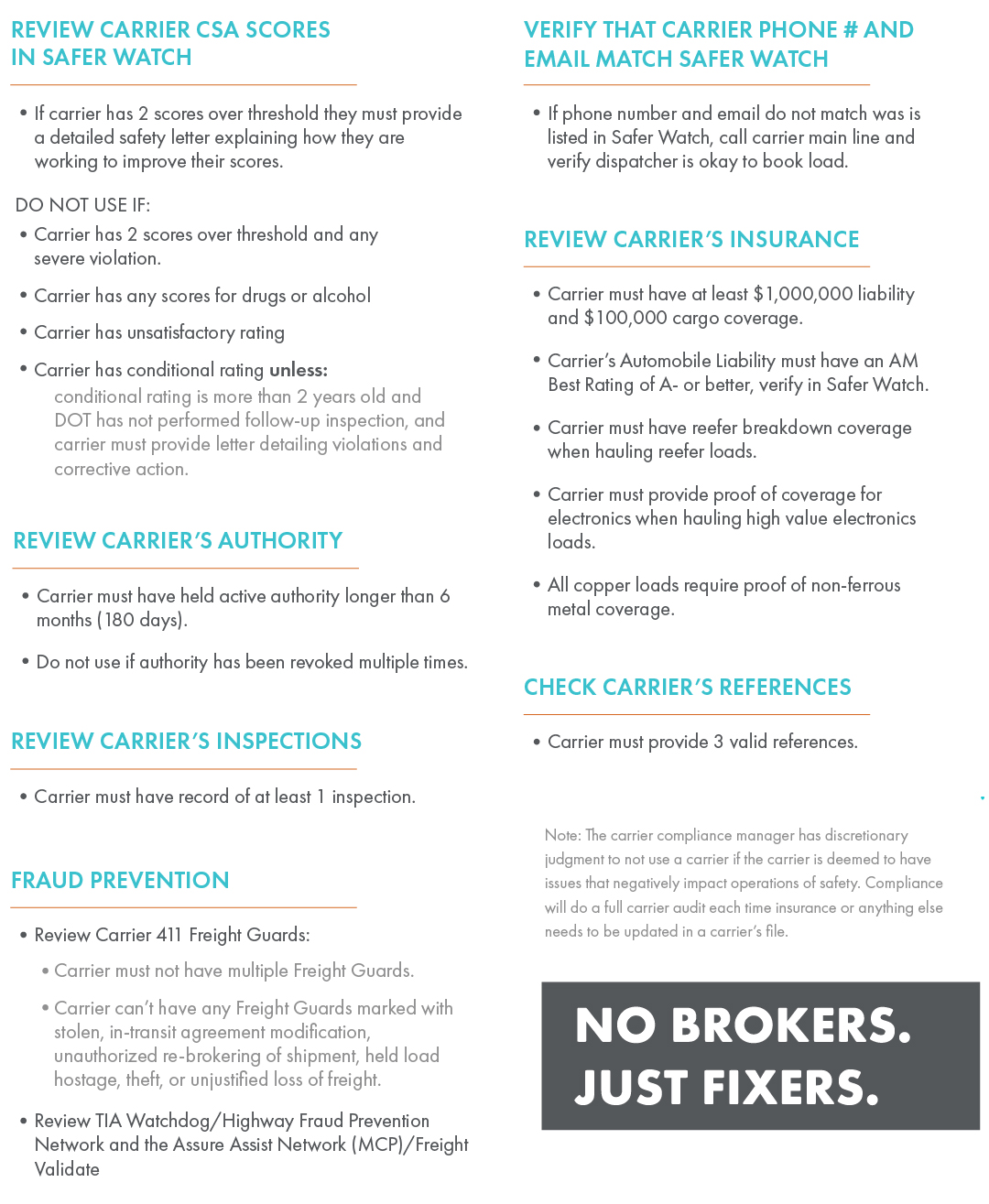
At LYNC, we already take a multitude of steps in our carrier vetting process that prevent us from working with unsafe carriers. We set our own standards for acceptable CSA scores: minimum 6 months of active authority, heavily restricted use of any carrier with 2 scores over threshold, no use of any carriers with severe violations, no drug and alcohol history, no unsatisfactory ratings, and a minimum of 1 valid inspection with reference from inspector.
After reviewing the carriers’ scores and authority, we use Carrier 411, the TIA Watchdog/Highway Fraud Prevention Network, and the Assure Assist Network (MCP)/Validate Freight to verify the people and companies that will be touching your freight. A carrier can have no more than one Freight Guard filed against them, and zero history of stolen goods, in-transit agreement modification, unauthorized re-brokering, holding load hostage, or unjustified loss of freight.
Lastly, we check the carriers’ insurance and references; carriers must have at least $1,000,000 liability and $100,000 cargo insurance, their automobile liability must have an AM Best Rating of A- or better, any reefer loads must have reefer breakdown coverage, and high-value electronics must provide proof of electronics coverage, and all copper loads require proof of non-ferrous metal coverage.
LYNC's Carrier Compliance Guidelines
So What's Next for Freight Broker Liability?
Not much at LYNC will change, as we’re already doing everything we can to ensure we’re working with the safest carriers we can find.
But every driver on the roads is wreck-free until they have a wreck. Semis and large trailers are often blamed for vehicle accidents, so no matter who is truly at fault, accusations and lawsuits are sure to start flowing in, and we’re sure a few will be aimed at us. Fortunately, our vetting processes have a proven track record of finding us the safest carriers, and we’ll continue providing freight services that keep our brokers, our carriers, and our neighbors on the road, as safe as possible.
Reach out to a broker today to book your freight with the safest teams out there.